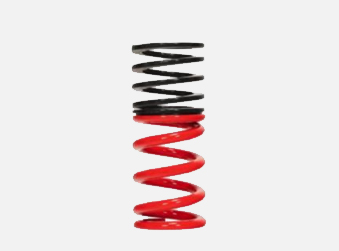
A helper spring stops the main spring from loosening at full droop. It has minimal spring rate, no effect on suspension, and covers up to 6” spring-to-perch gap, unlike a tender spring.

A helper spring stops the main spring from loosening at full droop. It has minimal spring rate, no effect on suspension, and covers up to 6” spring-to-perch gap, unlike a tender spring.
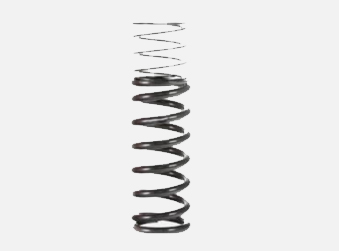
A tender spring gives a soft initial rate when compressed, then firms up once closed. The linear main spring sets the final rate; tender springs (linear/progressive) control initial rate.
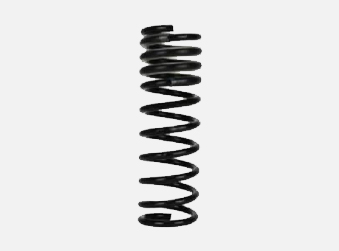
Dual rate springs combine soft and firm rates for daily and extreme use. Stiffness switching may cause jarring, so avoid frequent changes between casual and high-performance driving.
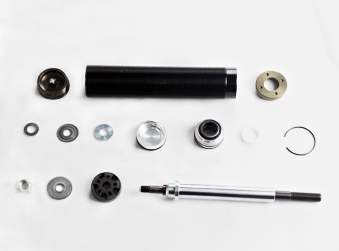
Equipped with an adaptive valve design, it automatically adjusts damping force based on road conditions and driving behavior, delivering stable handling and a comfortable ride in all scenarios.
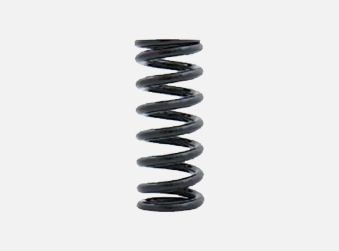
A linear spring provides a constant spring rate for predictable performance. Its consistent behavior simplifies setup and calculation, offering great advantages in racing applications.
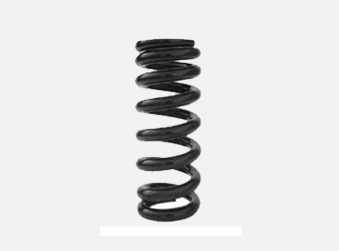
Progressive springs have increasing rates with compression, offering better handling and ride quality. However, their variable rates make performance harder to predict in racing.